
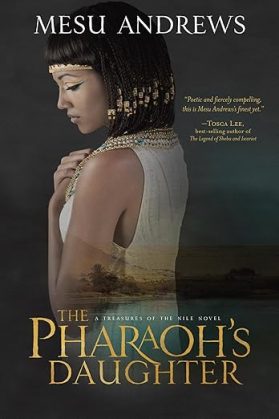
The vibrant customs and culture of ancient Egypt, with its unique power structure and bustling marketplaces, form a historically accurate backdrop in Mesu Andrews’ novel, The Pharaoh’s Daughter. The story’s richly detailed scenes transport readers to the time of the Hebrew enslavement, where the chilling order to kill all male infants threads the events with emotional tension that carries through the years that follow.
Watching through the eyes of the main character, Anippe, a royal woman paralyzed by a fear of death so profound it shaped her questionable choices, offers a unique view of the events surrounding the birth and early years of Moses. Layers of tangible dread flow into the narrative as the point of view toggles between Anippe and a Hebrew slave named Mered, husband of one of the Hebrew midwives ordered to kill the babies.
Anippe is a complex character who walks a fine line between heroine and villain. Andrews’ writing flows effortlessly, keeping the plot moving at a brisk pace while seamlessly weaving in profound relational insights between family, people, and gods. Unexpected character arcs give the familiar story from scripture a surprising twist, remaining faithful to the biblical account yet adding imaginative details that enhance the story’s appeal. The unpredictable nature of character development is thoroughly engaging as the Old Testament characters we read about in scripture take on an entirely relatable dimension in this novel filled with struggle, deception, and promise.
The book offers a surprising and detailed look at the formative years of a well-known biblical character through the eyes of the woman who rescued him from the Nile, making it a worthwhile read for fans of biblical fiction.
Click on the book cover for purchase link.
 Devoted Steps