
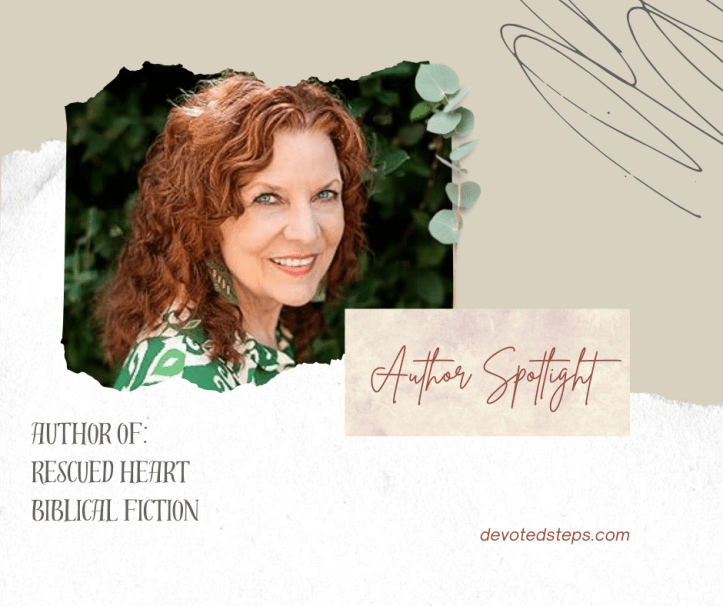
Christy-Award winner Angela Hunt writes for readers who have learned to expect the unexpected in novels from this versatile author. With nearly six million copies of her books sold worldwide, she is the best-selling author of more than 160 works ranging from picture books (The Tale of Three Trees) to novels and nonfiction.
Now that her two children are grown, Angie and her husband live in Florida with Very Big Dogs (a direct result of watching Sandlot too many times). This affinity for mastiffs has not been without its rewards–one of their dogs was featured on Live with Regis and Kelly as the second-largest canine in America. Their dog received this dubious honor after an all-expenses-paid trip to Manhattan for the dog and the Hunts, complete with VIP air travel and a stretch limo in which they toured New York City. Afterward, the dog gave out paw-tographs at the airport. When she’s not home writing, Angie often travels to teach writing workshops at schools and writers’ conferences. And to talk about her dogs, of course.
Readers may visit her web site at http://www.angelahuntbooks.com.
INTERVIEW:
Can you please provide a brief summary of your novel Rescued Heart?
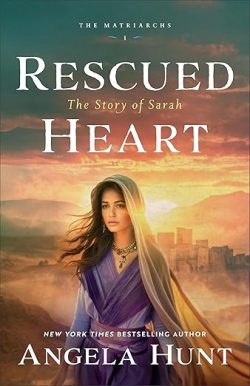
Rescued Heart is the story of Sarah—taken from Scripture and another ancient manuscript, the Book of Jasher. Scripture tells us relatively little about the first matriarch of our family, so this novel explores more of what her life might have been like.
What drew you to write about Sarah as the first subject in your new MATRIARCHS series?
I have been writing biblical historical fiction for a few years now, and I had yet to go back this far in history. It’s a challenge to find authentic history about the bronze age, but when you can find something, it’s fascinating.
How did you research daily life in ancient Mesopotamia and the nomadic existence Sarah would have experienced?
As I mentioned above, I used the Book of Jasher to fill in many of the details that Scripture does not give us. Jasher does not claim to be inspired Scripture, but it does give us ideas about what daily life in that age could have been like.
Sarah faces many difficult situations in her journey, including barrenness in a culture that deeply valued fertility. How did you approach writing about her emotional struggles?
Writing about infertility was easy for me, as my husband and I personally experienced it— though not nearly as long as Sarah did. I simply took what I knew and multiplied it by decades of years.
The relationship between Sarah and Abraham spans decades. What challenges did you face in portraying their evolving relationship over such a long period?
A marriage, like any relationship, goes through seasons—the honeymoon phase, the getting to-know you phase (especially in an arranged marriage), as well as various struggles regarding finances and leadership. Sarah put up with a lot—Abraham’s lies about their relationship, for one thing, and Sarah’s twice ending up in harems of foreign kings—yet they remained committed to each other.
How did you balance staying true to the biblical account while creating a full narrative with dialogue and interior thoughts?
Whenever I write in this genre, I aspire to 1) never contradict the biblical record, 2) never contradict the historical record, and 3) fill in the rest with what fits with what we can know about society, environment, governments, and technology at that time. The rest is emotional, because human nature does not change.
Sarah is often remembered for her laughter when told she would bear a son in her old age. How did you interpret this pivotal moment in her story?
Wouldn’t you laugh if someone told you—at ninety—that in a year you’d be nursing your own baby? I would! Sarah was not only old, but she had also been through menopause, so she thought of herself as a dried husk, no longer a woman. No wonder she laughed.
What surprising insights about Sarah did you discover during your research and writing process?
I don’t know if I “discovered” this, but I portrayed her as a woman who trusted in God through her husband. After all, Abraham was the one who talked to God, saw Him, prayed to Him—Sarah simply believed in her husband, who believed in God. But when God told Abraham to sacrifice Sarah’s beloved son, she had a real crisis of faith, and Jewish tradition holds that the shock of that realization was what resulted in her death. If you examine Scripture, you’ll see that Abraham and Isaac left Beersheba, where the family had been living, and went to Mount Moriah for the sacrifice . . . but Sarah doesn’t die in Beersheba, where she must have been living, but at Mamre, where Abraham had built an altar. And that’s all I can say without spoiling the ending of the book.
What do you hope readers take away from Rescued Heart?
That our relationship with God must be personal, not secondhand.
What are you working on next?
I am currently writing Righteous Heart, the story of Rebekah. Loving the research.
ABOUT THE BOOK:
356 pages
Released October 7, 2025
Bethany House Publishers
Available in Kindle and Paperback
Book Blurb: In Ur of the Chaldeans, Ishcah faces the daunting prospect of marrying Abram, a man she has never met and who renames her Sarai on their wedding day. Their union, arranged since childhood, tests her as she grapples with uncertainty about her future and Abram’s character, including his devotion to an unseen God–entirely unlike the idols she has worshiped all her life.
When Abram reveals that Adonai has directed him to leave the family, Sarai chooses to trust him and follow his God, even though she is not sure Adonai can make them a great nation. As the years pass without conceiving a child, Sarai wrestles with doubt and faith within her marriage. Her skepticism that their descendants will “outnumber the stars” grows with time. It will take nothing short of a miracle to prove Adonai’s faithfulness to His promise.
 Devoted Steps